
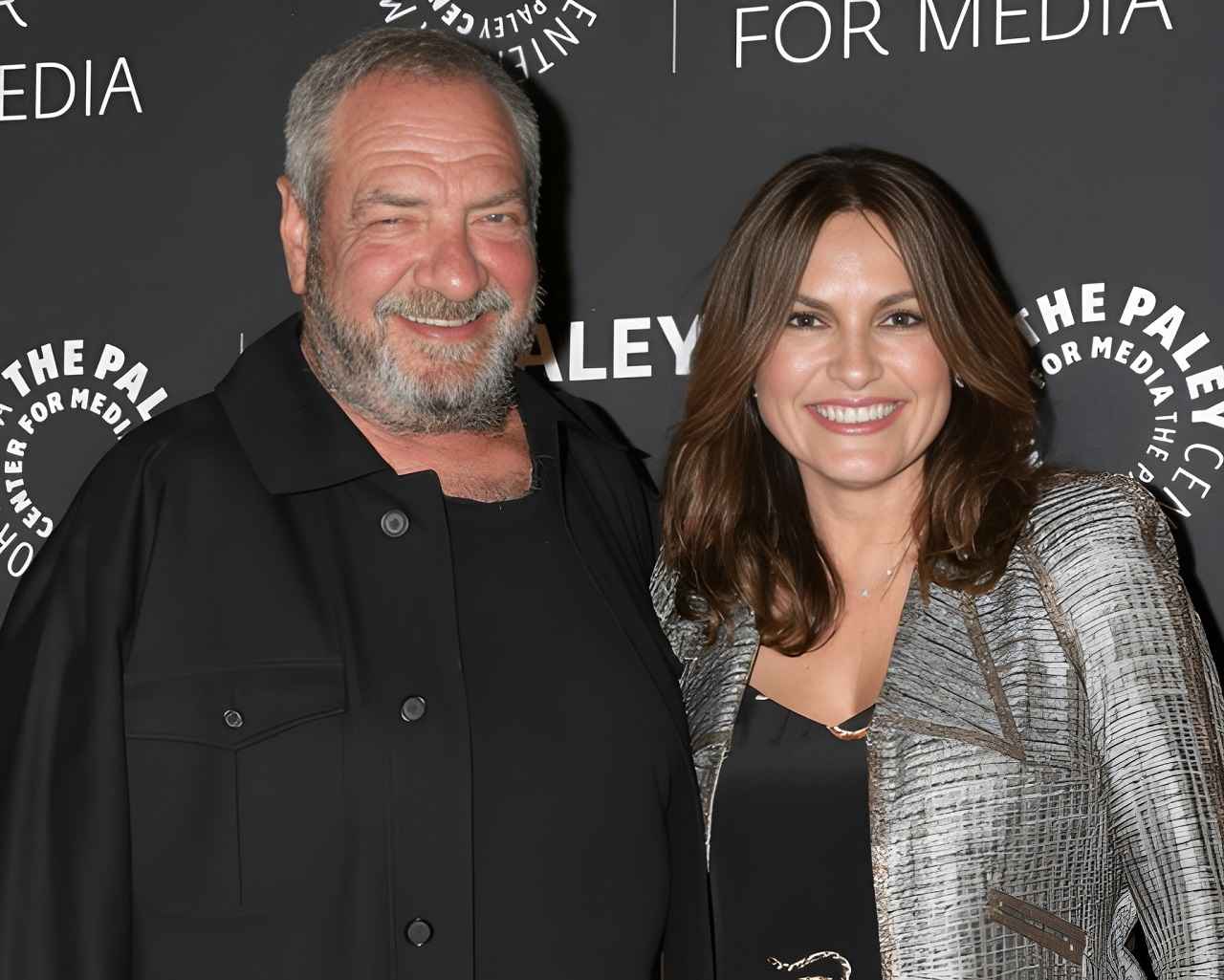
if you've ever binge-watched Law & Order until your eyes crossed or shouted "Dun dun!" at your TV like it was a personal catchphrase, then you owe a nod to Dick Wolf. The man behind the badge—er, the gavel—has turned fictional detectives into a cash machine that's still printing money faster than a counterfeit ring on his own shows. As of 2025, Dick Wolf's net worth sits at a cool $600 million, give or take a few script rewrites. Yeah, you read that right. Not bad for someone who started out scribbling ideas in the '70s, back when TV was all about three channels and hoping the antenna didn't fall off mid-episode.
But let's not get ahead of ourselves. This isn't just some dry rundown of bank statements (though we'll get there). Dick Wolf's story is like one of his episodes: full of twists, a little procedural drudgery, and enough real-life drama to make you wonder if Hollywood has its own spin-off for tax evasion. Born Richard Anthony Wolf on December 20, 1946, in New York City, he grew up in a world far from the glitz of primetime. His dad was an advertising exec, Mom a homemaker—solid middle-class vibes. Little Dick (hey, he went by Richard back then) wasn't exactly plotting world domination with action figures. No, he was more the kid devouring books and dreaming up stories, the kind that'd later fuel endless hours of SVU marathons.
Picture this: It's the 1960s, and young Dick heads to the University of Pennsylvania, where he majors in English lit. Smart move—nothing says "future billionaire producer" like diagramming sentences from Shakespeare. But here's where it gets really interesting (and a tad funny). After graduation, Wolf doesn't dive straight into showbiz. Nope, he packs his bags for London to study with the British-American Drama Academy. Why? Because apparently, analyzing Hamlet in a fog-shrouded theater beats flipping burgers stateside. He comes back stateside in the early '70s, lands a gig advertising for a booze brand (ironic, given how many of his characters nurse a scotch after a tough case), and starts freelancing scripts on the side.
His big break? Well, it wasn't overnight. Wolf penned episodes for shows like Miami Vice and Hill Street Blues—gritty, neon-soaked stuff that made viewers feel like they needed a shower after. But the real magic happened in 1989. NBC greenlights Christine Cromwell, a short-lived legal drama he created. It flopped harder than a bad witness testimony, but it caught the eye of Brandon Tartikoff, the network's programming wizard. "Hey, Dick," Tartikoff says (or so the legend goes), "what if we did a cop show that's half police work, half courtroom circus?" Boom. Law & Order is born.
Fast-forward to 1990: The pilot airs. Critics yawn at first—"too talky," they gripe—but audiences? They hook on like a perp to a plea deal. That iconic ching-ching sound? It's not just a sound effect; it's the sound of syndication deals raining down. By season two, the show's a hit, blending ripped-from-the-headlines stories with a formula so tight you could set your watch to the "in the criminal justice system" voiceover. Wolf's genius? Keep it simple. No capes, no aliens—just New York grit, moral gray areas, and enough plot twists to make M. Night Shyamalan jealous. Oh, and let's add a dash of humor: In one episode, a character gripes about the coffee being colder than a mob boss's heart. Classic Wolf—punchy, relatable, and probably based on some all-nighter in the writers' room.
Now, let's talk turkey—or rather, turkey bacon, since we're keeping it light. How does a guy like Wolf turn this into $600 million? It's not rocket science; it's television science. Law & Order didn't just run for 20 seasons (1990-2010); it spawned a franchise that's like the hydra of cop shows—chop off one head, two more pop up. There's SVU (since 1999, still chugging along with Mariska Hargitay as the unbreakable Olivia Benson), Organized Crime (2021 debut, because why not add Edie Falco to the mix?), and don't forget the Chicago universe: Fire, Med, and P.D., which kicked off in 2012 and turned windy city firefighters into TV gold. By 2025, Wolf's production company, Wolf Entertainment, has cranked out over 1,200 episodes across these series. That's not a resume; that's a library.
The money trail? Syndication is the silent killer here. Old episodes rerun on cable like clockwork, pulling in residuals that'd make your accountant weep with joy. A single Law & Order rerun can net Wolf's company millions annually, and that's before streaming deals. Peacock (NBC's streaming arm) shelled out big for exclusive rights in 2023, and word on the street is it's worth north of $500 million over several years. Add in international licensing—SVU airs in 190 countries, folks—and you've got a global ATM. Forbes pegs his annual earnings from these alone at around $50-60 million pre-tax. Not shabby for someone whose idea of a wild night is tweaking dialogue until dawn.
But wait, there's more (Infomercial voice activated). Wolf's not just a one-trick pony. He dipped his toes into films with Manhunter (1986, the first Hannibal Lecter flick, predating Silence of the Lambs), and even tried his hand at Masquerade (1988), a spy thriller that... well, let's say it didn't win any Emmys. Humor break: Imagine pitching a movie where spies flirt over martinis, only for it to bomb so hard it makes Ishtar look like Titanic. Wolf bounced back, though, because resilience is his middle name (okay, it's Anthony, but you get it).
Speaking of bounces, let's chat personal life—because no net worth story is complete without the soap opera off-screen. Wolf's been married three times. First to Susan Scranton (1983-1987), then Christine Marburg (1987-1995, with whom he has two kids), and finally Noelle Nepomuceno (2006-2019, three more kids). Divorces? Pricey. That last split reportedly cost him $10-15 million in settlements, but hey, at his wealth level, it's like spilling a latte—not fun, but survivable. He's got five kids total, and rumor has it he's the dad who shows up to soccer games with script notes on improving the team's "arc." Italicized chuckle: One tabloid quipped he's "divorced more times than Law & Order has been canceled"—which is four, by the way. Ouch, but fair.
Philanthropy? Wolf's no Scrooge. He's donated millions to causes like education and the arts, including a hefty chunk to UPenn, his alma mater. In 2020, he pledged $5 million to support New York police reform—ironic, given his empire glorifies the boys (and girls) in blue, but timely amid the headlines. It's the kind of move that keeps the PR folks happy and the conscience clear. And let's be real: In a town where egos inflate faster than balloon animals, Wolf's stayed low-key. Lives in a Manhattan co-op (not a mansion, mind you), drives a sensible SUV, and collects... wait for it... vintage baseball cards. Because nothing says "mogul" like arguing over a 1952 Mickey Mantle rookie.
Zooming out to 2025, what's next for the Wolf man? The franchise isn't slowing. SVU hit season 26 this year, pulling 7 million viewers per episode—beating out half the network lineup. FBI: International and its spin-offs are expanding the "One Wolf" banner into Europe-flavored procedurals. Streaming's the new frontier; Wolf's inked deals with Netflix for archival content, rumored at $100 million plus backend points. Analysts say his net worth could nudge $700 million by 2027 if the Chicago Fire spin-off about paramedics in space (kidding—sort of) takes off. But here's the funny line: If Dick Wolf ever retires, his tombstone should read, "Here lies Dick Wolf: He put the 'order' in Law & Order, and the 'worth' in net worth. Dun dun."
Breaking it down simply—because who needs jargon?—Wolf's fortune breaks like this:
- Franchise Syndication & Streaming: 60% ($360 million). The gift that keeps on giving.
- Production Fees per Episode: 20% ($120 million). He pockets $2-3 million per new hour of TV.
- Investments & Real Estate: 10% ($60 million). Manhattan pads, some stocks—nothing flashy.
- Film & Other Ventures: 5% ($30 million). The odd movie here, a book deal there.
- Residuals from Classics: 5% ($30 million). Miami Vice echoes faintly but fondly.
(Total: $600 million. Math checks out, unless inflation pulls a plot twist.)
Critics sometimes knock Wolf's formula: "It's the same show, week after week!" they whine. But that's the point. In a world of prestige TV with dragons and dystopias, Wolf delivers comfort food—cop chowder, if you will. Reliable, bingeable, and profitable. His writers' room? A well-oiled machine, churning out "ripped from the headlines" tales that mirror our chaos without the therapy bill. Think Epstein scandals in SVU or crypto heists in Organized Crime. It's escapism with a side of "hey, that's my life—sort of."
And the awards? Emmys galore—Law & Order snagged Outstanding Drama Series in 1997, SVU for guest acting nods, and Wolf himself has a star on the Hollywood Walk of Fame since 2013. Not bad for a guy who once joked his epitaph would be "He died of natural causes... boredom." Bold truth: His influence on TV is underrated. Without Wolf, no CSI boom, no endless true-crime pods. He's the godfather of procedural TV, proving you don't need fireworks to light up the ratings.
So, why does Dick Wolf's net worth matter? It's not just numbers; it's a testament to sticking to your guns (figuratively—his shows have enough real ones). In an industry where 90% of pilots crash and burn, he built an empire on consistency. Simple lesson: Find your Law & Order, and the fortune follows. As of November 2025, with new seasons greenlit and deals stacking, Wolf's not done. He's just reloading for the next act.
If you're inspired to chase your own TV dreams—or just curious about more mogul tales—check out these solid reads:
- Celebrity Net Worth: Dick Wolf Profile – Straight facts on his finances.